B2B Upselling: Expand Only After the Customer Has Proof of Value
A practical B2B upselling method: separate adoption from expansion, validate the customer's next problem, choose the right offer, and know when to wait.
By Miljan @ Lead Scorer 9 min read
Upselling is not the next email in a renewal sequence. In B2B, an account can have an active contract and still lack a reason to buy more. The useful question is whether the customer has realized value from what they already own and has a new, verified constraint that an expanded offer would remove.
This guide gives sales and customer-success teams a decision rule, a short account review, a conversation script, and a way to record a no. It does not assume that product usage alone proves purchase intent.
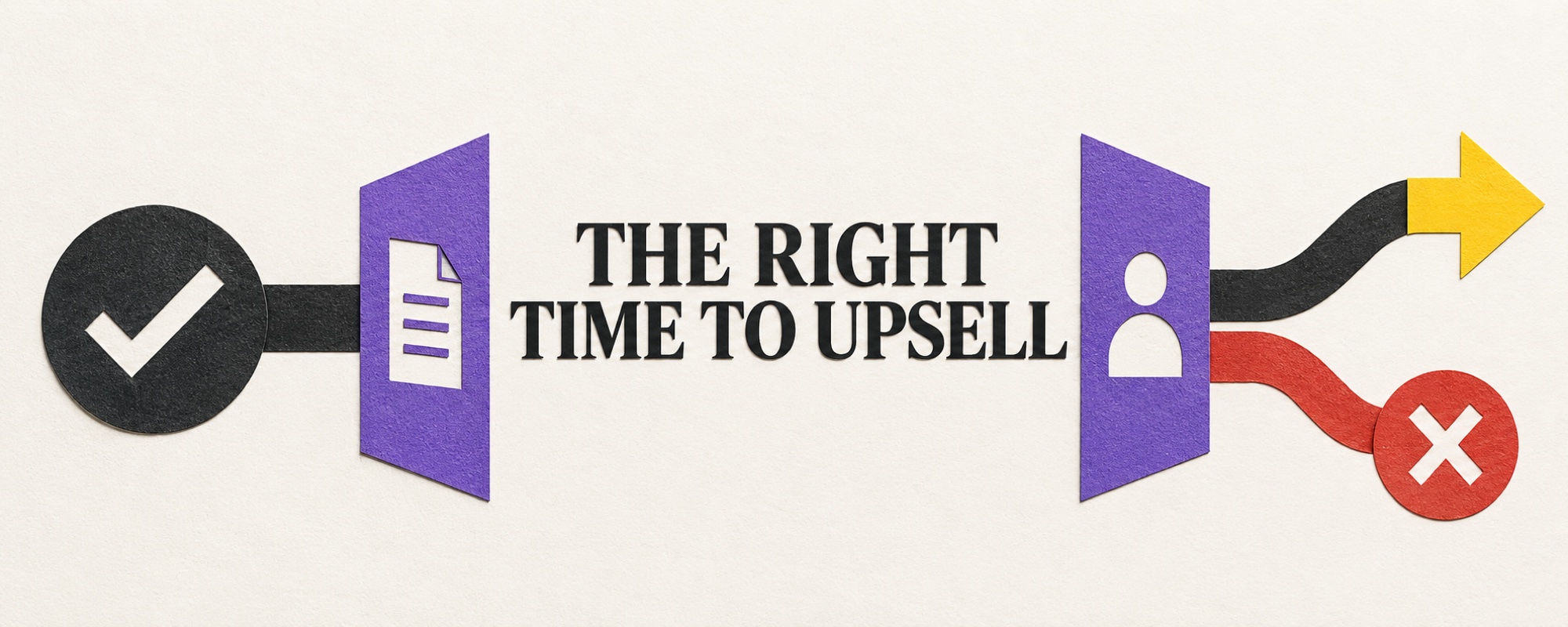
Upsell, cross-sell, renewal: name the decision
An upsell expands the solution already in use: more licensed seats, greater capacity, or a tier that removes a real limit. A cross-sell adds a different product or module. A renewal continues the existing agreement. These can happen together commercially, but they answer different customer questions. Salesforce's cross-selling explanation makes the distinction; Microsoft Partner Center also lists license expansion separately from accounts with low utilization or renewal risk in its customer recommendation categories.
For example, a five-person operations team already uses a reporting service. Adding seats for a second team is an upsell if that team has the same problem and can use the service. Selling a separate training package would be a cross-sell. Renewing five seats unchanged is neither. These are hypothetical examples, not Lead Scorer product plans or customer results.
Use a four-gate account review
- Value delivered: What outcome did the customer buy, and what evidence shows it happened? A completed implementation is not the same as an adopted workflow. Ask the customer to confirm the result in their own terms.
- New constraint: Is another team requesting access, is the current capacity genuinely limiting work, or has the customer named an adjacent goal? A high usage count can prompt investigation, but it is not a purchase order.
- Offer fit: Which specific change solves the constraint? If a process fix or training on the existing plan would solve it, recommend that first.
- Decision path: Who will use the expansion, who owns the budget, and what proof would they need? A champion's enthusiasm is useful but not a substitute for the economic decision.
The order matters. Microsoft advises partners to examine actual license deployment and active usage; low adoption or repeated help questions can call for training before an upsell. Its adoption guidance is a useful reminder that usage data requires interpretation. The same principle applies beyond software: verify realized value before suggesting more scope.
Separate a signal from a reason to buy
A request for more seats, repeat use by a second department, or a plan limit can be a signal. Each still needs a customer conversation. Ask what work is blocked, how the team currently handles it, and what happens if nothing changes. If the answer is “we have not rolled out the first purchase yet,” the next task is adoption, not expansion.
A recent discussion in r/CustomerSuccess asks whether teams carrying expansion targets have enough real opportunities in their books. It is one lightly engaged question, not evidence of a market-wide trend. Its wording captures a practical distinction: an expansion target cannot manufacture a customer problem.
Open a diagnostic conversation, not a bigger-plan pitch
Start with the outcome and ask permission to test the next need: “Your operations team has completed the reporting workflow we agreed on. You mentioned another group may need the same view. Is access for that group now a priority, or should we focus on making the current setup work better first?” If the customer says yes, explore the users, workflow, constraints, and decision process before proposing a tier or price.
The question allows a genuine no. It also prevents a common mistake: interpreting a renewal meeting as permission to reopen the whole account. A customer-confirmed need is a more defensible reason to expand than a generic discount or urgency script.
Record the decision and the reason for waiting
Use a compact account note: original goal; evidence of achieved value; new problem in the customer's words; candidate offer; owner; decision-maker; next conversation; and reason to wait, if any. A simple spreadsheet is enough to test the process. Do not label every account with rising usage “expansion-ready.” Track confirmed needs separately from unvalidated signals and from proposals actually accepted.
If support issues, weak adoption, or a missing sponsor block the next purchase, make the recovery or adoption plan explicit. Our customer onboarding guide helps define first value; the account planning guide helps document stakeholders and decisions. Neither replaces a conversation with the customer.
Next step: review one account without an offer in hand
Pick one existing customer. Ask the four gate questions before choosing a package. If the evidence points to adoption, solve that first. If it points to a new, customer-confirmed constraint, write one specific proposal and a fair no-purchase path. The best upsell is a useful next decision for the customer, not a bigger number on a forecast.
Frequently asked questions
What is upselling in B2B?
B2B upselling is an offer to expand the same solution for an existing customer, such as more seats, capacity, or a higher tier. It should solve a verified next problem, not merely raise the contract value.
How is an upsell different from a cross-sell or a renewal?
An upsell expands the existing solution; a cross-sell adds a distinct product or module; a renewal maintains the current agreement. A price increase without added customer value is not automatically a useful upsell.
When should a B2B team offer an upsell?
First confirm that the customer achieved the outcome they originally bought, then verify a new constraint or goal, identify the owner of that decision, and show how a specific expansion addresses it. An approaching renewal date alone is not enough.
Which accounts should not receive an upsell pitch?
Pause when the original implementation is incomplete, adoption is weak, an unresolved support issue blocks value, the proposed offer has no clear use case, or the customer has not confirmed the next priority.