Deal Desk Process: Approve the Exception and the Quote Version
Build a practical B2B deal desk process with a complete request, named decision owners, conditional approvals and a controlled final quote version.
By Lead Scorer 7 min read
A deal desk process gives a nonstandard commercial request a clear route to a decision. The seller submits the complete exception; authorized reviewers assess the relevant terms; the final approval identifies the exact offer that can be sent. A message saying “looks good” is insufficient when several quote versions are circulating.
The useful starting point is a reviewable request and a decision record. A small B2B team can define both before buying software or creating a dedicated department. This guide provides an intake template, a routing method and a fictional example of a conditional approval that must be checked again after a change.
Define what the deal desk decides
A deal desk coordinates decisions about terms outside the approved selling framework. Those terms can concern price, payment schedule, package structure, service commitments or other obligations. Review responsibilities depend on the business and its policies; sales operations cannot authorize every kind of commitment simply by collecting the request.
Keep three adjacent activities separate. Sales negotiation establishes a feasible exchange with the buyer. A sales proposal explains the offer. The deal desk establishes which exceptions the seller's organization authorizes. The wider quote-to-cash process continues through contracting, billing and collection. This article focuses on the internal decision before an offer is released.
Separate the standard path from the exception path
Write down the conditions that a seller may offer without additional review. Give that policy an owner and an effective version. Then list the changes that require a decision, with the corresponding decision authority and backup. Do not copy another company's discount percentages or approval hierarchy as universal rules.
For each trigger, record:
- the term being changed and the approved baseline;
- the information needed to assess that change;
- the person authorized to decide;
- any other decision on which it depends;
- the escalation route when the owner is unavailable.
A standard transaction follows the standard path. An exception enters review. A request that cannot be classified returns for clarification. Sending every deal through the same meeting hides the reason for review and makes it harder to distinguish missing information from a difficult decision.
Use one intake brief for the complete package
The reviewer needs to see the combined request. A lower price, later payment and additional implementation work can arrive in different conversations while belonging to the same proposed exchange. Keep them in one brief attached to the current quote.
Use this copyable structure:
- Identity: opportunity, customer entity, seller and current quote identifier or version.
- Baseline: the standard scope, price structure, payment schedule and relevant commitments.
- Requested changes: each deviation, with the buyer's stated reason and the source of that statement.
- Impact: the economics, capacity requirements and other dependencies assessed by their responsible owners. Label unverified assumptions.
- Decision needed: the proposed package, acceptable alternative and questions still open.
- Timing: the buyer's actual decision date, the source confirming it and the next internal review point.
- Evidence: links to the quote, relevant correspondence and supporting calculations, with appropriate access controls.
“The customer needs this today” does not explain the exception. Record what must happen today and what evidence supports that deadline. If a necessary input is missing, identify who will obtain it instead of asking approvers to infer it from a long message history.
Route decisions by authority and dependency
Assign one coordinator to keep the request moving and communicate its status. That person owns coordination, not every approval. A delivery owner can assess whether a proposed implementation date is feasible; the relevant commercial authority can assess a price exception. Specialized contractual questions require the authorized reviewer for that area.
Independent decisions can be reviewed in parallel. Dependent decisions need an explicit order. If the proposed price assumes a reduced scope, establish which scope is deliverable before treating the price as approved. When reviewers disagree, record the unresolved dependency and escalate through the defined route. Do not count a majority of informal reactions as authorization.
Zapier's quote approval workflow documentation illustrates the distinction between concession types, approval roles and actions such as approve, reject or request changes. It describes a specific HubSpot/Slack template, not a Lead Scorer capability or a required software stack.
Give the request an unambiguous state
The following states are an editorial template to adapt to your operating rules:
- Needs information: a named person must supply a specified input.
- Ready for review: the brief is complete enough for the relevant decisions.
- In review: identified owners are considering the current version.
- Changes requested: the package must be revised before a decision can complete.
- Approved with conditions: listed conditions still require verification before release.
- Approved for release: the named version meets the required approvals and conditions.
- Declined or withdrawn: record the reason and any permitted alternative.
Every state needs a next action and an owner. Include a timestamp and the version under review. Agree internal response expectations based on actual reviewer availability and complexity. A missed response target triggers escalation; it does not silently approve the deal.
Bind approval to the exact quote version
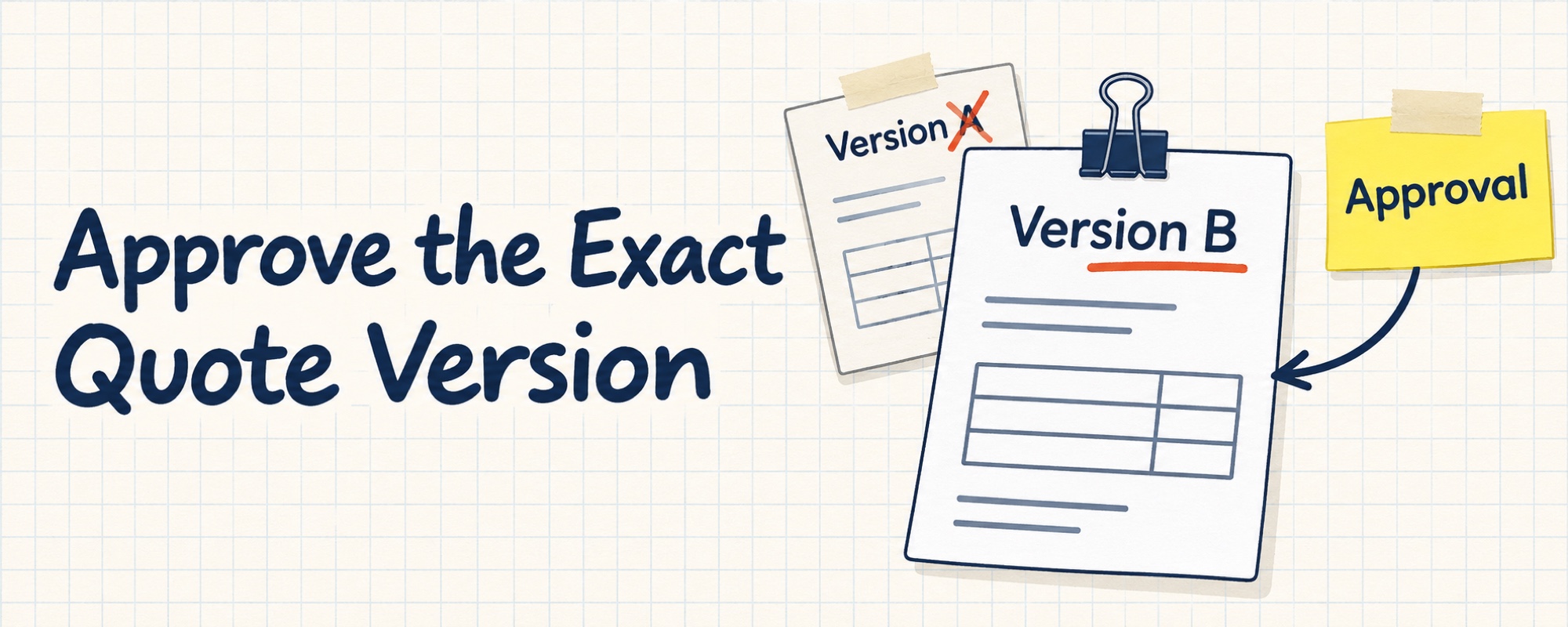
Record who decided, what they authorized, the rationale, conditions, decision time and offer version. Preserve the evidence and previous decisions. A later editor must be able to tell whether approval covered the current package or an earlier one.
GitLab's public Sales Order Processing handbook provides a concrete example: its quote procedure requires the applicable approvals before generating the customer PDF, and changes after approval must be resubmitted. These are GitLab's operating rules. The transferable principle is to keep the approved decision attached to the offer it actually covers.
Before release, compare the final document with that decision: customer entity, scope, quantities, price, dates, payment schedule and other approved commitments. If something changes, record the delta and apply your review policy. Do not overwrite the old approval or label a changed package approved because its filename still contains “final.”
A fictional exception, from intake to release
Imagine a software buyer requesting a smaller initial package, a later billing date and an earlier implementation start. The seller opens one request and links quote version A. The delivery owner confirms that the earlier start is feasible only if a named customer administrator is available. The commercial reviewer accepts the smaller package subject to that scope remaining unchanged. The billing request remains undecided.
The coordinator records a conditional package. It is not ready for release: one decision is open and one dependency lacks confirmation. The buyer then asks to add another team. That creates version B and changes the workload behind the earlier delivery decision.
The seller records the difference and returns the affected terms for review. After the relevant owners decide on version B and confirm the conditions, the coordinator checks that the customer-facing quote matches it. This illustrative sequence makes no claim about cycle-time savings or any customer's results. Its value is that everyone can identify the current decision.
Review the process without rewarding rubber stamps
Track incomplete requests, elapsed time waiting for information, reviewer time, revisions, decision reasons and changes made after approval. Separate standard transactions from genuine exceptions. Compare similar requests before diagnosing a bottleneck: an incomplete submission and a complex approved exception are different cases.
Look for recurring questions that the standard policy could answer more clearly. Change that policy only through its owner, with a recorded effective version. A frequently granted exception is a reason to investigate, not automatic permission to make it standard.
Start with one anonymized past request. Reconstruct the baseline, requested change, evidence, decisions and released version. Any gap becomes a specific improvement to the intake brief or handoff. Explore Lead Scorer for the upstream work of researching and qualifying prospects; keep commercial approval authority and quote controls in the systems and policies that actually own them.
Frequently asked questions
What is a deal desk process?
A deal desk process coordinates the review of nonstandard commercial requests. It identifies the exception, gathers the information needed to decide, routes it to authorized owners, records the decision and links approval to a specific offer version.
Does every deal need a deal desk review?
No. Define approved standard terms and route exceptions to the relevant reviewers. A standard deal can follow the normal quoting path. Review requirements should come from your actual authority and risk policies.
What belongs in a deal desk request?
Include the opportunity, current quote version, standard terms, requested changes, buyer rationale, supporting evidence, combined commercial impact, delivery dependencies, decision deadline and recommendation. Mark unknown information explicitly.
Is deal desk approval still valid after a quote changes?
Approval should identify the version and conditions it covers. A change to an approved term or dependency requires review under your policy before the revised quote is treated as approved. Keep the previous decision in the history.