The SaaS Distribution Course #4: How Litix Reached 85% of Massachusetts School Districts Mostly Through Word of Mouth
A practical course for turning founder credibility, responsive service, customer advocacy, association trust, and peer proof into a measurable distribution system.
TL;DR
Litix says it reached 85% of Massachusetts school districts mostly through word of mouth while still operating without a robust sales and marketing team. The Massachusetts Municipal Association independently reported the same 85% share. This is not a story about luck or a founder knowing everyone. It is a trust-transfer system.
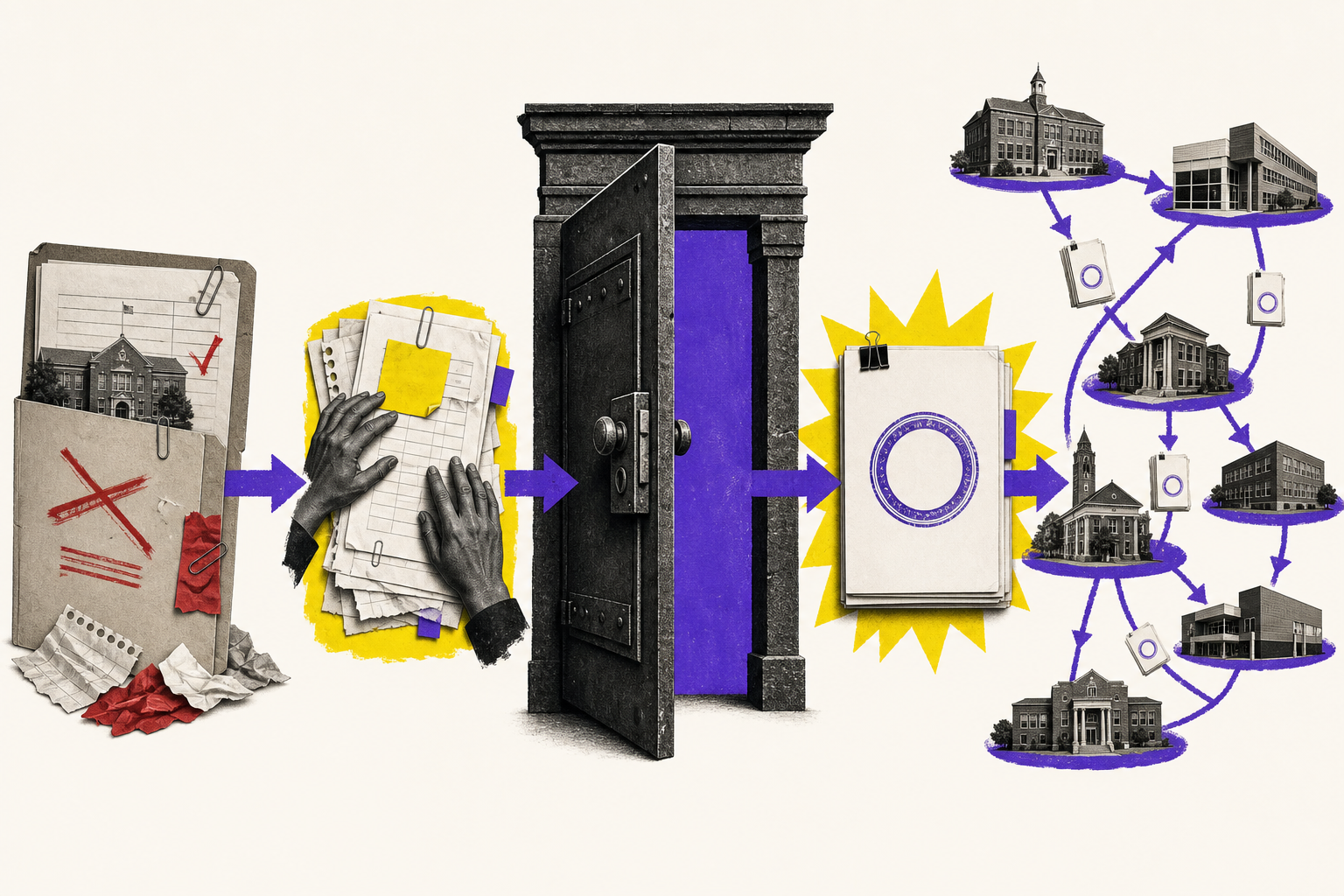
Founder credibility earned early hearings. A product tied to a painful, repeated job created value. Fast, sometimes deliberately unscalable service turned value into advocacy. A respected association transferred that trust across the state. Conference peer proof made adoption visible, and new districts entered through people they already trusted.
The warning is as useful as the result. Litix reports 97% retention, but the founder says some customer work cannot scale. He also says the move beyond founder-led sales has produced only limited success. Copy the sequence that makes trust travel. Do not copy permanent service heroics without measuring their cost.
What you will build
You will leave with five operating assets: a narrow-buyer trust map, a manual-service ledger, an advocate loop, an institution scorecard, and a 30-day market-expansion test. Each asset has a pass condition and a stop condition. The output is a system a small team can run, measure, and hand to an agent without pretending trust can be automated.
Who this is for
Use this system when buyers form a dense professional network and purchases carry personal or institutional risk. It fits vertical SaaS, regulated software, security, healthcare, associations, local government, education, and specialist operations. It is especially useful when cold outreach alone struggles because buyers trust peers more than vendors.
Do not build the full system for a low-value self-serve product one person can buy and activate in minutes. Institutional endorsement, high-touch support, and live proof events add cost. They should remove a real trust barrier, not make a simple sale look important.
Verified case snapshot
| Stage | Evidence | Limit |
|---|---|---|
| First buyer | A former colleague agreed because she trusted Mastrullo | A relationship win, not broad demand |
| Initial wedge | Compliance training helped fund development of the harder data platform | No revenue split disclosed |
| Before association scale | Roughly 60 districts before the MASS presentation | Founder-reported; exact date absent |
| Massachusetts result | 85% of school districts, mostly through word of mouth | Share independently corroborated; channel attribution is not audited |
| Current company figures | 300+ districts, five endorsements, and 97% retention | Company-reported |
| Municipal expansion | More than 50 municipalities joined the MMA partnership after launch | MMA-reported; no revenue contribution |
The episode also contains a rough 70% demo-conversion estimate. Michael Mastrullo immediately says the company does not measure it exactly. Treat it as directional founder evidence, not as a benchmark. No ARR, CAC, ACV, gross margin, sales-cycle, or channel-attribution table is public.
The model: trust must travel without the founder
Litix sells into slow public-sector procurement. Buyers are skeptical of vendors. The founder says email and LinkedIn are difficult, and even a warm introduction does not guarantee a reply. One channel cannot carry the full purchase.
insider credibility → useful workflow → responsive service → peer advocacy → association trust → visible proof → next qualified buyer
Each stage does a separate job. Credibility earns attention. The workflow proves utility. Service reduces adoption risk. Advocacy makes the claim portable. The association transfers institutional legitimacy. A conference makes adoption visible. A peer recommendation creates a warmer next hearing.
This is the distinction most “word of mouth” advice misses. Word of mouth is an output. The system underneath must give a customer a useful result, a reason to talk, a trusted room, and a simple packet that carries the proof.
Step 1: choose one buyer room you understand
Mastrullo spent 20 years in education, including 16 years as a principal. He had managed budgets, sat near bargaining work, and knew the language of superintendents. That history did not guarantee meetings. It gave Litix judgement about the job and an initial network with which to test it.
Complete this buyer-room worksheet:
- Buyer group: ______
- Repeated, high-stakes job: ______
- Manual time or institutional risk: ______
- Title controlling the decision: ______
- Institution convening these buyers: ______
- Credibility you have already earned: ______
- Credibility you still need to borrow: ______
Pass condition: name 30 buyers with the same job and two rooms where they compare solutions. Stop condition: your wedge is only a broad label such as “AI for schools,” with no repeated workflow beneath it.
Step 2: sell saved work, not software
The founder says buyers do not purchase a data platform. They purchase roughly 50 hours of work returned. Litix's current demo page promises a walkthrough using the district's own data. This places value inside a real workflow instead of a generic feature tour.
For the first ten accounts, record:
- the current process and decision deadline;
- hours lost collecting, cleaning, or comparing information;
- data and approvals required for activation;
- the first decision-ready output;
- every manual action performed by the founder or team;
- the next owner: product, documentation, temporary service, or permanent service.
Metric: time to first decision-ready output. Pass condition: the next account requires less manual work for the same result. Stop condition: every account becomes a unique consulting project with no repeated product pattern.
Step 3: turn service into an advocate loop
Litix reports measuring response in minutes and seconds. Mastrullo describes accepting some work the team knows it cannot scale because the customer becomes enthusiastic and tells peers. In a tight professional network, this can be powerful. It can also hide a services business inside a software margin.
Run a 30-day advocate loop instead of promising permanent heroics:
- Resolve the highest-risk activation blocker quickly.
- Record the before state, intervention, output, and elapsed time.
- Turn the repeated answer into product, data, or documentation.
- Ask which trusted peer faces the same job.
- Give the advocate one factual proof packet they can forward.
- Measure whether support demand falls for the next account.
Pass condition: one retained user introduces another qualified buyer while repeat support per account declines. Stop condition: customers praise the team, but the same manual request returns every week.
Step 4: approach the institution after member proof
Litix did not begin with an association sponsorship. The founder says the company was serving about 60 districts before meeting the Massachusetts Association of School Superintendents. The association initially warned that it did not endorse vendors. During the presentation, its leader asked how to bring Litix to every district. The association then subsidized part of access.
The sequence matters: members created proof, then the institution amplified it. MASS is the only statewide organization dedicated to Massachusetts superintendents and assistant superintendents, according to its official overview. Its trust is specific to the buyer room Litix needed.
Score each candidate institution from zero to two on six fields:
- density of your exact buyers;
- trust and relevance inside the workflow;
- repeated events or member communication;
- ability to subsidize or simplify access;
- data or standards that improve the product;
- willingness to test one member workflow before a broad partnership.
Require eight of 12 points. Pass condition: the institution puts you before ten qualified members and one activates. Stop condition: the plan begins with a logo, paid booth, or webinar while no member can show an outcome.
Step 5: make peer proof visible in the buyer's room
At the MASS summer conference, Litix asks existing customers to raise their hands. When most of the room uses the product, the remaining nonusers can see the adoption gap. The founder says some then ask to learn more. This is not a trick if the adoption is real and participation is voluntary. It is compressed social proof.
Reproduce the mechanism through a small user roundtable. Demonstrate one real workflow. Let a customer explain the result and limit in their own language. Give nonusers one next action. Track qualified follow-ups, activated evaluations, peer introductions, and support burden. Do not use applause or badge scans as the primary metric.
Pass condition: three qualified nonusers request the workflow and one activates. Stop condition: attendance is high but no buyer takes a product action within 14 days.
Step 6: cross the founder-led gap one geography at a time
Litix's later challenge is not more awareness in Massachusetts. It is transferring the system to new places and new sellers. Buyer titles change by state. Mastrullo says California centers the chief business official more than the superintendent. The company also says its small sales and marketing team has had limited success moving beyond founder-led sales.
Choose one adjacent geography. Recruit five local insiders, ten buyers, one institution, and one proof event. Keep the founder involved until buyer language, objections, and the first useful output repeat. Then document the talk track, qualification rules, proof packet, service boundary, and handoff point.
Pass condition: a nonfounder produces three qualified meetings and one activated account using the same evidence. Stop condition: expansion requires the founder's personal history in every conversation.
What failed, and what remains fragile
| Constraint | Classification | Decision |
|---|---|---|
| Warm contacts still ignore messages | Structural limit | Do not model a network as guaranteed pipeline |
| Cold email and LinkedIn struggle | Channel-context mismatch | Add local proof and institutional trust before scaling volume |
| Slow procurement | Market constraint | Track stage time and start before the budget deadline |
| Unscalable support creates praise | Execution tradeoff | Time-box it and reduce repeat work |
| Founder-led transition is difficult | Later-stage transition | Expand one geography and one buyer role at a time |
| Retention and conversion lack definitions | Evidence limit | Measure your own cohorts and economics |
Your 30-day trust-transfer test
- Days 1-3: choose one buyer room and map 30 accounts, two conveners, and one repeated job.
- Days 4-7: interview five buyers and define the saved-work output and decision deadline.
- Days 8-12: manually activate two accounts; time and classify every task.
- Days 13-15: productize the highest-frequency task and retest it.
- Days 16-18: create one forwardable proof packet with evidence and limits.
- Days 19-21: ask each active buyer for one relevant peer introduction.
- Days 22-24: score three institutions and select one above eight of 12.
- Days 25-27: propose one member workflow, not a general sponsorship.
- Days 28-30: run a proof session; review activation, referrals, support time, and stage velocity.
Lead Scorer implementation: operate the loop with approval gates
Lead Scorer can reproduce the research, list separation, qualification, drafting, and feedback loop. It cannot create Litix's product value, borrow an association's reputation without proof, or decide that unlimited manual work is economically safe.
Phase 1: define the buyer and the trust job
Run $icp-offer-context. Use create_product and create_scoring_config to store the buyer, repeated job, saved-work output, timing trigger,
institution, relationship strength, and disqualifiers. Separate fit from trust. A buyer can fit the
ICP while lacking a reason to evaluate now.
Define one buyer room in one geography. Score role fit, repeated-job evidence, dated timing, relationship path, and institutional context. Disqualify consultants, students, and adjacent titles that do not control or influence the workflow. Do not find contact data yet.
Output: a one-to-ten rubric two operators can apply within one point. Pass: an eight requires role fit, a dated trigger, and evidence of the job. Stop: the score is mostly company size and industry.
Phase 2: keep four lists separate
Lead Scorer discovers companies on the web and retains the sources used to qualify them. It then verifies the contact’s current role, applies your scoring criteria and prepares messages for your review. Unverified information remains unknown.
Build four deduplicated lists for one geography: buyers, door openers, institutions, and advocates. Preserve the source and relationship type. Never mix warm and cold response rates.
Output: 30 direct buyers, five door openers, three institutions, and every current advocate with a source. Stop: one person appears in several lists without a single declared role.
Phase 3: research and score before spending credits
Run $signal-research-dossier. Require two dated signals for each direct buyer: a
bargaining cycle, budget pressure, compliance deadline, system change, role change, public
procurement, or relevant event participation. Pull pending records with get_leads_pending_scoring and write the reason through submit_lead_score.
Route scores eight to ten to contact, six to seven to watch or useful content, and one to five
to stop. Only then run $contact-discovery. Preview the cost of find_lead_contact_info and confirm credits only for keepers.
Pass: at least ten of 30 buyers score eight or above with explainable evidence. Stop: the model gives a high score without a dated job signal.
Phase 4: draft one ask for each role
Use $cold-email-first-touch for strangers. Create the draft campaign with create_campaign, load its context, and save reviewed copy through write_campaign_drafts. A direct buyer receives an offer to compare a real workflow.
A door opener receives a precise introduction request. An institution receives a proposal for
one member workflow. An advocate receives a factual packet to forward.
Draft one first touch per lead under 150 words. Use the verified job signal. Ask for one workflow comparison or the correct owner. Do not claim an endorsement, a peer result, or a saved-hour number that the source does not support. Leave every message in draft.
Run $outreach-qa-audit. Human review, credit confirmation, campaign activation, and
sending remain mandatory approval points. Lead Scorer should never combine warm door openers
with cold buyers in one sequence.
Phase 5: turn objections into new proof
Classify every reply and meeting: no job, wrong role, timing, trust, product gap, procurement,
or service risk. Put repeated objections into Content Studio as a brief, source-backed guide, or
proof packet. When that material receives visible engagement, capture the signal with create_audience_source, rescore it, and return only qualified people to reviewed
outreach.
The operating loop is buyer evidence → manual resolution → reusable proof → visible peer engagement → qualified follow-up. The agent manages records and drafts. The founder owns truth, service boundaries, institution relationships, credit gates, and approval.
Saveable checklist
- One buyer room, geography, and repeated job.
- One decision-ready output tied to saved work or reduced risk.
- Every manual task assigned a future owner.
- Support creates proof, then repeat support declines.
- Customer evidence exists before institution outreach.
- Institutions score at least eight of 12.
- Proof events measured by activation, not attendance.
- Warm, cold, institution, and advocate lists stay separate.
- One geography expands before the next begins.
- Human approval before enrichment, activation, or sending.
Sources and limits
- Michael Mastrullo on Life's a Pitch, 25 June 2026. The complete stored transcript was audited from character 0 to 45,160 in contiguous windows.
- Litix official site for the current 300+ districts, five endorsements, and 97% retention claims.
- Massachusetts Municipal Association for the independently repeated 85% share and 50+ municipalities in its partnership.
- MASBO practitioner session for documented use of Litix during public-school negotiations.
- MASS overview for the association's statewide buyer role.
The 85% Massachusetts share has independent corroboration. The claim that most growth came from word of mouth, the 97% retention figure, the approximate demo conversion, the support-to-advocacy causal link, and most operating details remain founder or company reported. The transcript says roughly 200,000 users had gone through Academy, while the current demo page shows 143k+ Academy users. Because the definitions may differ, neither number is used as the result. Replicate the trust-transfer mechanism and measure your own economics.
Frequently asked questions
How did Litix reach 85% of Massachusetts school districts?
Founder Michael Mastrullo attributes most Massachusetts growth to word of mouth, reinforced by rapid service, a Massachusetts Association of School Superintendents partnership, and visible peer proof at conferences. The 85% share is independently repeated by the Massachusetts Municipal Association.
Is Litix's 97% retention independently verified?
No. The founder and current company site report 97%, but no public cohort, period, logo-versus-revenue definition, or audit is available.
When should a SaaS pursue an association partnership?
After several members already use the product and can show one repeated outcome. Litix approached its decisive association after reaching roughly 60 districts, so the institution amplified proof instead of inventing it.